ABS or PVC? Making the Right Choice in Edgeband Selection
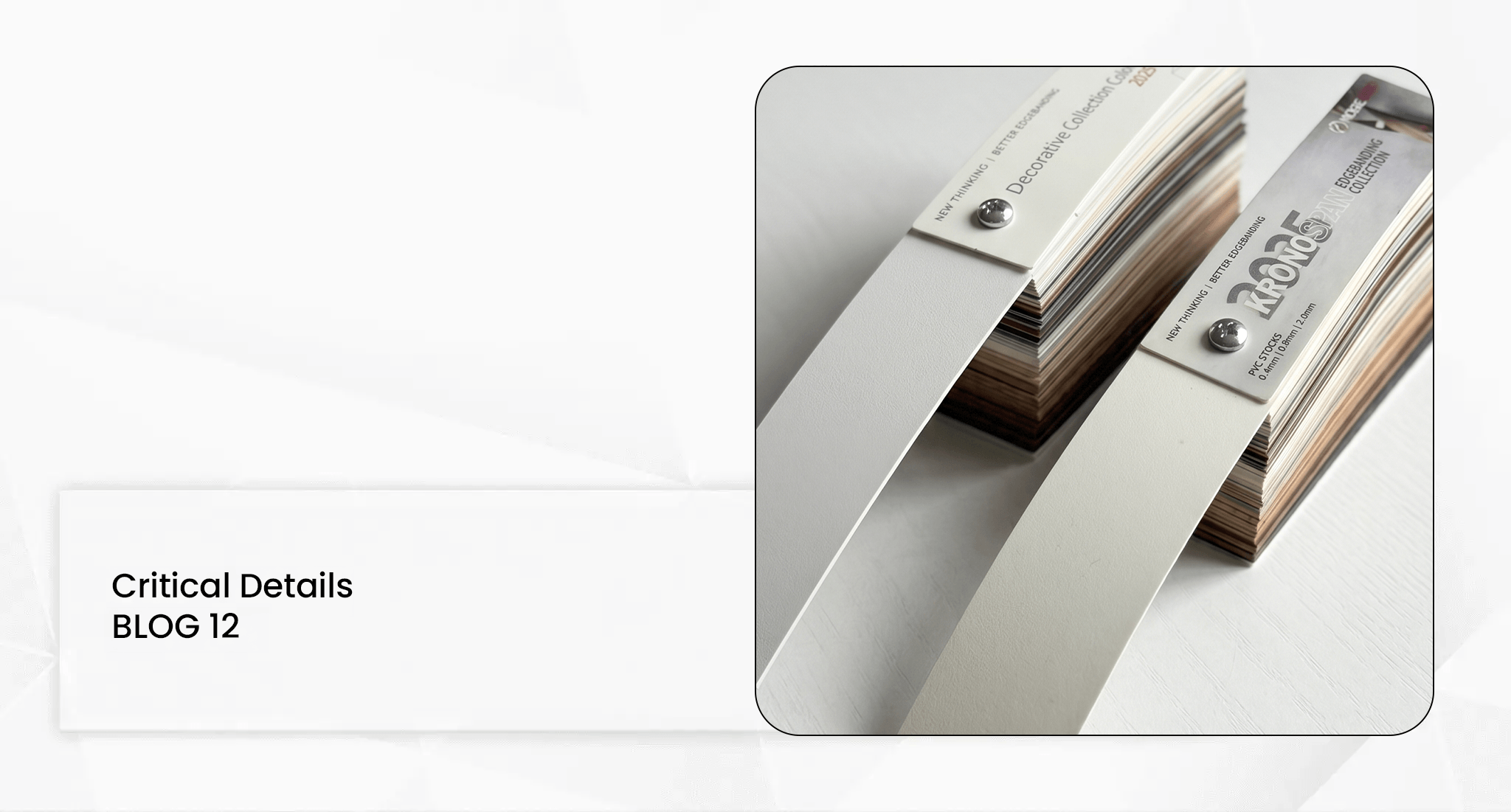
We compare two of the most commonly used materials in furniture manufacturing from technical, environmental, and processability perspectives.
In the furniture industry, the choice of edgeband is a critical decision that directly affects both product quality and brand image. ABS (Acrylonitrile Butadiene Styrene) and PVC (Polyvinyl Chloride) edgebands remain the two most widely used materials on the market. However, comprehensive comparison content based on technical and environmental data is still surprisingly limited.
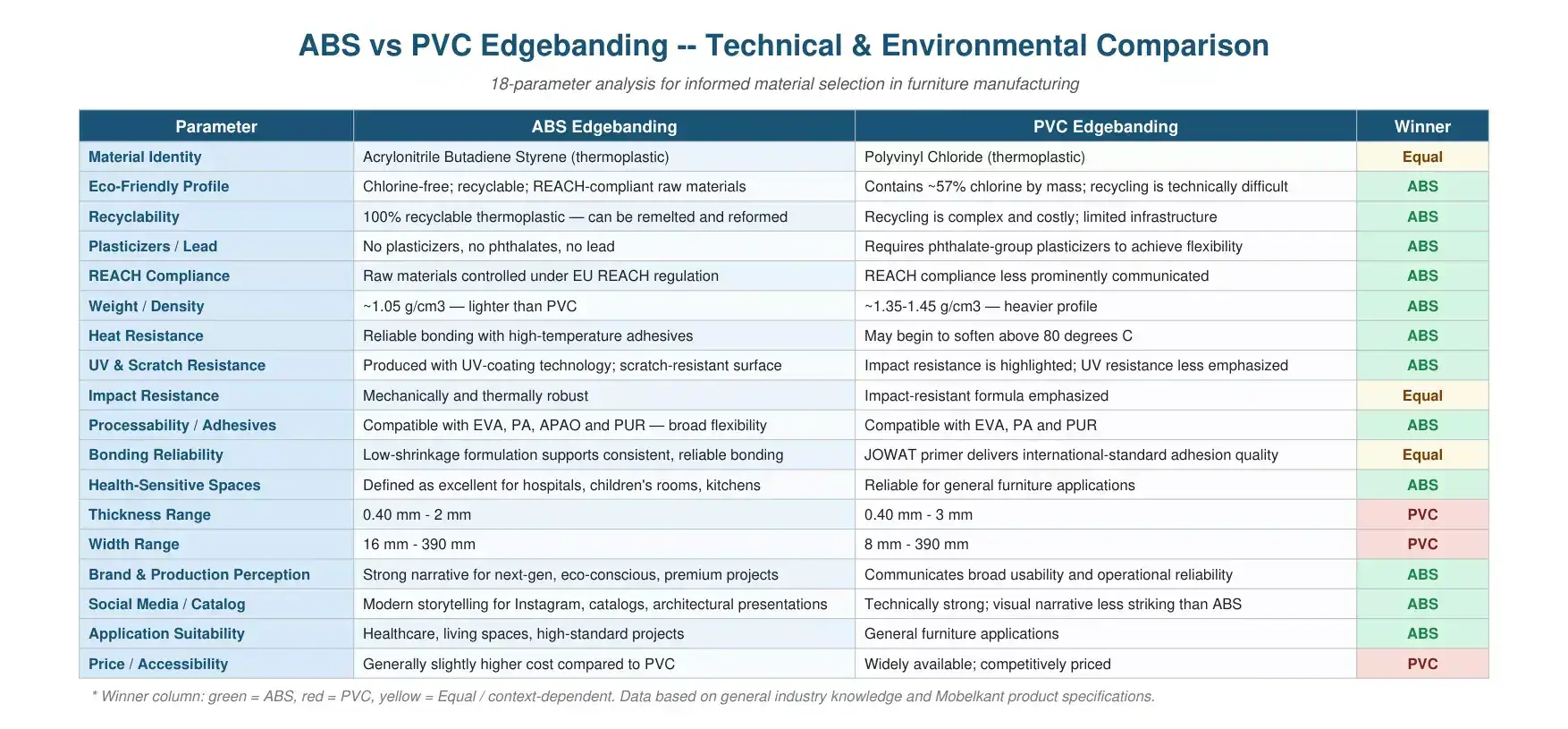
In this article, we examine all the key parameters furniture manufacturers and edgeband buyers should consider when making a decision. From material identity to environmental impact, from processability to dimensional flexibility, we provide a comprehensive analysis across 18 different parameters.
1. Material Identity and Chemical Structure
What Is ABS?
ABS is a thermoplastic material produced by copolymerizing Acrylonitrile (A), Butadiene (B), and Styrene (S) monomers. This three-component structure combines the best characteristics of each monomer into a single material: Acrylonitrile provides chemical resistance and rigidity, Butadiene increases impact resistance, and Styrene offers processability and surface appearance. The result is a durable, lightweight, and highly processable material widely preferred in premium furniture applications.
What Is PVC?
PVC is obtained through the polymerization of vinyl chloride monomers derived from ethylene and chlorine. In its raw form, PVC is rigid; therefore, plasticizers are added to make it flexible enough for edgeband applications. Due to its high chlorine content (approximately 57% by mass), PVC has long been at the center of environmental and health discussions. Nevertheless, it remains one of the most established and operationally reliable materials in the furniture industry.
2. Environmental Impact and Sustainability
Environmental impact has become an increasingly decisive factor in edgeband selection, especially in European markets and public tenders where environmentally friendly materials are often explicitly required.
- Chlorine Content: ABS does not contain chlorine. PVC contains approximately 57% chlorine by weight. Under combustion conditions, chlorine-containing materials may release harmful compounds such as dioxins.
- Recyclability: ABS is a fully recyclable thermoplastic that can be remelted and reshaped efficiently. PVC recycling is technically possible, but separation and processing costs are generally more complex.
- Plasticizers: PVC typically requires plasticizers to achieve flexibility. Certain phthalate-based plasticizers have been restricted in some countries for sensitive applications. ABS does not require plasticizers.
- REACH Compliance: Raw materials used in ABS production are generally controlled under the European Union’s REACH chemical regulations and manufactured according to strict harmful substance limitations.
Conclusion: From a carbon footprint and waste management perspective, ABS generally presents a more sustainable profile compared to PVC.
3. Technical Performance
Impact and Mechanical Resistance
Both materials can be manufactured with high impact resistance suitable for industrial furniture production. However, ABS offers a lighter structure due to its lower density (approximately 1.05 g/cm³), providing advantages in applications such as:
- Thickness: 0.40 mm – 3.00 mm
- Width: 8 mm – 390 mm
- Cabinet doors
- Drawer fronts
- Lightweight furniture systems
- Transportation-sensitive production operations
Heat Resistance
PVC edgebands may begin softening when exposed to temperatures above approximately 80°C. This can create challenges in heat-sensitive applications such as:
- Kitchen countertop side panels
- Areas close to ovens
- High-temperature commercial interiors
ABS, when combined with heat-resistant adhesives, generally provides more reliable performance under elevated temperatures.
UV and Scratch Resistance
ABS edgebands produced with UV coating technologies provide improved resistance against:
- Color fading
- Surface scratches
- Long-term sunlight exposure
This makes ABS particularly valuable for kitchens, bathrooms, commercial interiors, and sun-exposed furniture applications.
4. Processability and Production Flexibility
Compatibility with production lines is one of the most important factors in edgeband selection. Both materials can be processed with standard hot-melt adhesives. However, ABS often offers a broader compatibility range:
EVA (Ethylene Vinyl Acetate)
A cost-effective and widely used adhesive compatible with both ABS and PVC.
PA (Polyamide)
Used in applications requiring higher thermal resistance.
APAO (Amorphous Polyalphaolefin)
Frequently preferred with ABS systems; PVC may require adhesive optimization for best results.
PUR (Reactive Polyurethane)
Compatible with both materials and provides the highest bonding strength through moisture curing. ABS formulations with low shrinkage characteristics help minimize deformation during bonding and support more consistent edge quality. PVC production often relies on primer systems — such as JOWAT primers — to improve adhesion performance. These systems provide excellent international-standard bonding performance but may require additional material and process steps.
Dimensional Range Comparison
PVC
- Thickness: 0.40 mm – 3.00 mm
- Width: 8 mm – 390 mm
ABS
- Thickness: 0.40 mm – 2.00 mm
- Width: 16 mm – 390 mm
PVC offers an advantage in heavy-duty and certain exterior-oriented applications thanks to its ability to reach 3 mm thickness.
5. Health and Safety
From a health and positioning perspective, ABS is often preferred for sensitive environments such as:
- Hospitals and clinics
- Children’s furniture
- Schools
- Kitchens and dining areas
- Premium residential and hospitality projects
The absence of lead and plasticizers is considered a major advantage for ABS in these applications. PVC remains technically robust and highly reliable, although it generally does not carry the same “health-oriented” communication strength as ABS.
6. When Should You Choose Which Material?
Choose ABS If:
- Environmental certifications are required
- Premium product positioning is targeted
- UV and scratch resistance are important
- Sustainability-focused branding is a priority
- Lightweight production is preferred
- European market standards are targeted
Choose PVC If:
- Cost efficiency is the main priority
- Standard furniture applications are sufficient
- 3 mm thickness is required
- Existing production infrastructure is in place
- Operational stability is prioritized
- Wide dimensional flexibility is needed
Conclusion
ABS and PVC are both powerful materials serving different needs within the edgeband industry. PVC has been the industry’s reliable workhorse for decades thanks to its operational stability, cost efficiency, and broad usability.
ABS, on the other hand, has become one of the strongest solutions for modern projects where sustainability, health perception, and premium brand positioning are increasingly important.
For furniture manufacturers, ABS is no longer only a technical material choice — it is also an investment in modern product communication, environmental awareness, and customer perception.
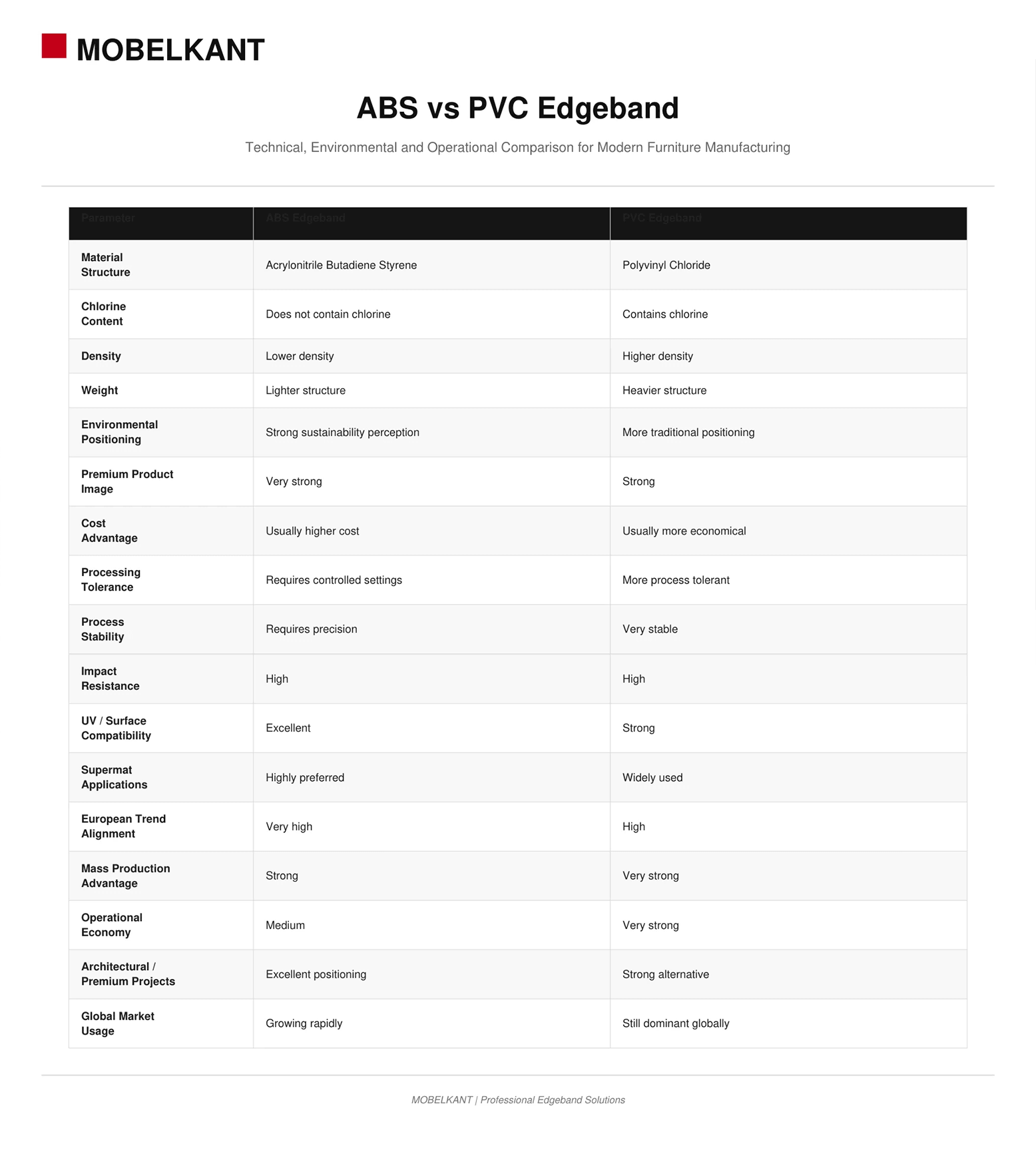
By reviewing the 18-parameter comparison table presented in this article, you can determine the most suitable solution for your own project.